
At Westmeria Counselling Services, we know that reaching out for support can be one of the hardest steps a person takes. For many men, long-standing attitudes around masculinity, vulnerability and mental health can make that step feel even more difficult.
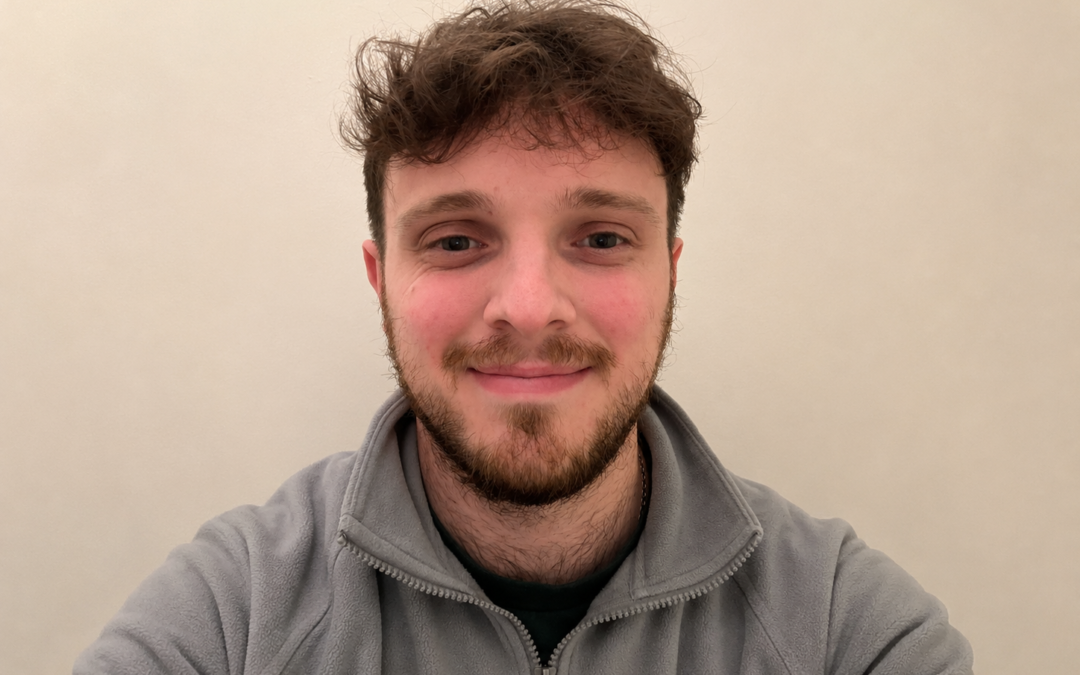
In this personal reflection, Westmeria counsellor Oli shares his journey into counselling, shaped by the loss of his father and a desire to support others facing their own challenges. He also offers an honest insight into the barriers many men face when considering counselling, what happens when they finally take that first step, and why he believes attitudes towards men’s mental health are gradually changing.
Through his work and experience, Oli highlights an important message: nobody should have to struggle alone and here is his story.
Oli’s story
I came to counselling in a roundabout way. When I was 19, I was doing a housing apprenticeship – about as far from the therapy room as you can imagine. Then, when I was 20, my dad passed away. He was 58. He was a complex man who hadn’t taken particularly good care of himself, and sadly it caught up with him.
Losing him young, and we were young; my brother and I are part of a small percentage of people our age who’d lost a parent gave me a push I hadn’t expected. It made me look at my own life differently and it made me think: I want to do what I actually want to do. I’d always had this thought in the background that I wanted to work with people, to help in that way. But I assumed that meant university, and I didn’t want to go down that route, so I’d shelved it.
What I didn’t know then and wish I’d known sooner is that you don’t have to take the university route at all. I did my Level 2 and 3 and then my Level 4 with Westmeria and it was easily one of the best experiences of my life. The support, the people around you, everyone’s there for the same reason.
My dad had struggles in his life. There’s no value in suffering in silence. Watching that up close, and then losing him, made it feel right to try to understand what had been going on for him, and then to channel that into being a small part of a much bigger effort to stop those things happening to other people. A lot of my decisions in life come back to asking, what would dad think? So yes, there’s a nod to him in everything I do.
The Gap in the Room
Here’s something that struck me early on: only around 20% of the people coming through the door at Westmeria are men. That figure doesn’t reflect what’s actually going on out there. Men are struggling. The numbers tell us that. But they’re not coming in.
In my own caseload, I’m lucky enough to have a roughly even split at the moment, but generally it skews heavily female. But the gap tells a story about where we are culturally with men and mental health.
What Happens When Men Do Come In
When men do finally make it through the door, I notice something distinctive. Sometimes there is what I can only describe as a kind of bravado at the start. Particularly when it’s a male counsellor sitting opposite them.
That’s what tends to happen. It starts with almost a ‘sizing-up’, and I get it, this is unchartered territory and they are on their guard (as they have learned to be) not knowing what to expect. I’m pleased to say it’s surprising how soon that fades away. We are quickly able to move past the initial judgments which might include ‘what can this guy possibly know and help me with?’. What’s underneath is usually someone who’s been sitting on something for a long time, often a very long time, before they finally decided to come. The men I work with typically arrive having already suffered far longer than they needed to.
There’s also a question they seem to be working out in those early sessions: what do I actually think about this? Is this the “man up” brigade in my head talking, or am I actually open to it? That tension is real, and it takes time to settle.
What Counselling Actually Is
I think there’s a perception, and I understand where it comes from, that a counsellor is on the other side of the table from you, or to pass judgment. That really isn’t it. We’re here to go on the journey with you. To be with you, not opposite you. We’re in your corner.
And here’s the other thing I want people to understand: I’m not the expert. The only person who truly knows himself is himself. What I’m doing is learning and growing alongside the people I work with. There’s real magic in that when you realise the growth isn’t happening to one person in the room, it’s happening to us both. It’s a genuinely collaborative experience. And I think that framing that it’s a therapeutic relationship, that we meet at the same level would land well with men if we could get that message across.
Why the Culture Makes It Hard
A lot of what holds men back isn’t even really theirs. It’s been handed to them. From the time we’re small, boys are taught that anger is an acceptable feeling to show, but tears and softness aren’t. That conditioning runs deep, and most of us don’t even question it because it feels like it’s just us – our own beliefs, our own thinking. Often it isn’t.
There’s also a strong pack mentality at play. Within male culture, there are quite varying views on counselling. I’ve talked to people about my own journey who think it’s an amazing thing to do. And I’ve heard others respond with something like, why would you do that? Just be a man. It’s two very different worlds, sometimes sitting right next to each other.
What makes the difference, I think, is seeing others do it. Not even seeing their whole journey, just seeing that other people, people who look like you, are doing it. That it’s alright. That you’d be welcome.
Role models matter enormously here. Paddy Pimblett, the UFC fighter from Liverpool is someone who comes to mind. Here’s a man in one of the most physically aggressive sports there is, who openly talks about men’s mental health. That puts a massive pin in the idea that the only way to release what you’re carrying is through physical aggression. You can speak about it. You can actually feel it. And if someone like Paddy is saying that, it lands differently than if I say it.
The Generational Shift
I’m genuinely hopeful. You have to be. I think there’s a real change in the tide happening generationally. The parents of today’s young men are starting to see the value in it, and I think that’s going to continue down the line, with the trajectory heading upward. One day, counselling might just be normal. Someone might say, I can’t meet you until half six, I’ve got my session first, and nobody raises an eyebrow. That would be a great place to get to.
And it’s not just cultural, there are structural shifts happening too. The Government launched its first ever men’s health strategy in late 2025, a ten-year plan with mental health as a significant strand. That kind of attention matters.
I find this work rewarding in every sense. Even singular moments, 10 seconds within a 50-minute session where you sense something has shifted, are important. Knowing you’ve played even a small part in someone’s journey to understanding themselves better, to facilitating real change: that’s why I do it.
Oli is a counsellor at Westmeria, working with adults across a range of presenting issues. He has a particular passion for supporting young men.