
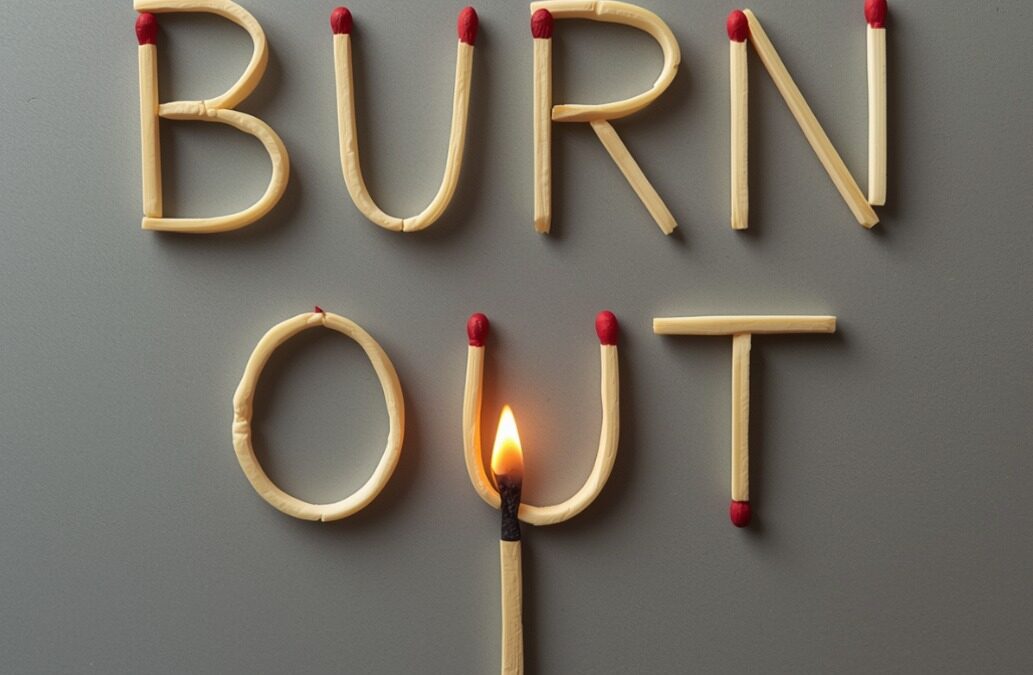
As a counsellor, I have quickly discovered my role isn’t confined just to the counselling room or contained into ‘my working hours’. It follows me into my training days, my supervision sessions, and into my everyday life. I imagine this is the same for many different roles, and the work people do, whether it be counselling, a corporate role or working in the public sector. Workloads can feel very complicated, conflicted, and all-consuming at times. I am coming to the end of my current training course this Summer, much like many others, when I will start work as a Qualified Counsellor, but I am aware the process of juggling my ‘working’ responsibilities, and managing my own mental health is just starting.
In a culture that often celebrates productivity, doing more can feel like a badge of honour. Longer hours, constant availability, and the pressure to achieve, meet expectations are frequently seen as signs of ambition and commitment. But boiling away underneath all this is burnout, something many people experience silently. Feeling they just must keep going, always feeling the need to do better.
Burnout isn’t just feeling tired after a long week. It’s a deeper, emotional, physical, and mental exhaustion caused by prolonged stress, or even just a drip feed of small stresses. It can creep in gradually, first as fatigue, then as detachment, and sometimes helplessness or lack of purpose. Work that once felt meaningful can start to feel draining or even pointless. This burnout can occur in all jobs, and areas of work, not just those in Counselling. Meetings, scheduling, emails, clients, commuting. Not allowing ourself to work at a slightly slower, calmer pace which somehow is misinterpreted as ‘not efficient enough’. Now I love counselling, and I want to ensure it never feels too much, or pointless. I want to make sure I reduce the possibility of burn out as much as possible, so I always feels the rewards of counselling.
The impact of burnout can affects relationships, health, and overall quality of life. People experiencing burnout may struggle with sleep, concentration, or motivation. I know for certain I have experienced this during my counselling training, especially as I still work in a busy role alongside my training, I run a household, taking care of two young children and their needs, family expectations, seeing friends, desperately trying find time to exercise, and not forgetting, I need to sleep as well. You can see how easy it is to feel overwhelmed, and how easy it is for our minds and bodies to burn out. It can feel impossible to do it all, and really, it is impossible.
One of the challenges I have experienced that contributes to my own burnout, is my invisible emotional load. After client work or a session ends, it doesn’t leave my mind. I might find myself reflecting on what was said, what wasn’t said, and what I could have done differently, did I offer my client enough? Again, I feel this at work too, did I contribute to that meeting, have I provided enough information, did I reply to my emails quick enough? In my parenting, was I fair? Did I manage their emotions correctly? The list goes on….and on. The pressure to “get it right” can be intense!
So how do you maintain balance in a world that constantly asks for more of you?
First, it’s important to accept that balance doesn’t mean perfection. There will be weeks when my assignments take priority, and other weeks where my friends and family do. I have started aiming for flexibility not productivity, recognising that my capacity will shift, and that is okay. I need to be flexible and accept my limits.
Whilst longer breaks, hopefully on a exotic beach are wonderful, I realise they can also feel quite far out of reach. I have realised that for me, what is more important is creating space for myself outside of all the responsibility. Whether it’s putting my phone down for the day, jumping on the trampoline with my kids, making sure I am silly with them and laugh, getting outside on a sunny day to spend a few hours gardening, saying no to extra plans at the weekend so I have time to just to be, ensuring I always stop work for a decent lunch break and take much need time away from the screen. It’s the small little moments that are making the biggest impact to my stress levels. I make sure I have plenty of breathers! Small mindful moments can have a powerful impact. It sounds simple, and I always thought these ideas were a bit pointless if I am truly honest, I am busy and don’t always have time for lunch or to cut the grass! But when I started practicing regular breaks, it shifted something for me. Stepping away from responsibility even for just a moment, helps me interrupt the constant “doing mode” that keeps my stress level high. It helps me feel calmer, more grounded, and less reactive to pressure. I even find these mini breaks help me become more focused and productive as well.
My favourite things right now, is giving myself time to buy a coffee after the school drop off. I love spending 10-15 minutes in the garden now its lighter in the evenings, it helps me feel more present, the smell of the pIants, and watching the wildlife. Sitting with the cat. In the context of burnout, it’s not always about making big changes overnight. Sometimes, it’s these small, repeated acts of awareness that quietly restore my balance.